
THE CONSUMER WHO ARRIVED EARLY
Skin Longevity and the Category That Will Redefine the Next Decade of Beauty

The industry is quietly retiring the term “anti-ageing”. What replaces it is not a marketing refresh but a shift in the science, the consumer, and the economics of prestige beauty, all arriving at once.
For most of its modern history, the beauty industry sold one promise in a hundred different bottles: that the visible marks of time could be slowed, softened, or reversed. The promise was cosmetic, and it was retrospective. It addressed the issue of wrinkles only after they had already appeared.
That promise is being retired. The word “longevity” will replace it, and this change is not a rebrand. This change affects the fundamental science, consumer behaviour, and economics of the category, all of which occur simultaneously.
The figures explain the urgency. The anti-ageing products market alone was estimated at fifty-six billion dollars in 2025 (Grand View Research), yet the more telling number sits one level above it: the longevity and preventative wellness market is forecast to rise from seven hundred and eighty-four billion dollars in 2024 to one point eight trillion by 2034 (Premium Beauty News). Fragrance, for its part, remains the one beauty category in which prestige consistently outperforms mass. Capital reads those curves precisely.
The clearest signal came from the largest house in the industry. In June 2025, L’Oréal unveiled its Longevity Integrative Science programme, founded on a single reframing: that biological age, not the number on a birth certificate, is the measure that matters and that skin health is a component of healthy ageing rather than a question of appearance alone. When the market leader moves the conversation from correction to prevention, the category follows.
Longevity has displaced anti-ageing because the biology now supports it. In 2013, a landmark paper in the journal Cell defined the hallmarks of ageing; a 2023 update expanded the framework to twelve interconnected biological processes that drive the ageing of every tissue, skin included (López-Otín and colleagues, 2023). The shift is conceptual rather than cosmetic. Ageing is no longer treated as accumulated surface damage but as a set of definable cellular mechanisms that can, in principle, be slowed.
One of those mechanisms is especially legible in the skin. Cellular senescence is when a cell stops dividing but doesn’t die, staying in the tissue and releasing a mix of inflammatory signals called the senescence-associated secretory phenotype, or SASP. In the dermis, senescent (old) fibroblasts accumulate with age and with ultraviolet exposure, degrade the collagen and elastin that give skin its structure, and sustain the low, chronic inflammation that drives the visible signature of an ageing face. Photoageing damage from sunlight rather than from years alone measurably increases that senescent burden.
This rewrites the brief. A product designed against a wrinkle treats a symptom. A product designed for skin longevity intervenes earlier in the conditions that produce the wrinkle: the integrity of the barrier, the balance of the resident microbiota that contemporary dermatology now treats as a functional organ (Byrd, Belkaid and Segre, 2018), the oxidative load the skin carries through a day in a city, and the inflammatory tone of the tissue itself.
That is the conversation we have with founders inside The Idea Mixologist, our formulation pillar. The question is no longer about which active ingredient erases the visible problem; instead, it focuses on which combination of actives, at what concentrations, and in which vehicle, will keep the system functioning well for a longer period. This approach is more demanding, rewarding companies that possess genuine formulation expertise rather than those that rely on a skilled art director and a borrowed claim.
Longevity is usually framed as skincare. It need not be. Fragrance holds a privileged position in human physiology that the category has barely begun to exploit. The olfactory signal is the only sensory input that reaches the limbic system without first passing through the thalamus, travelling directly to the amygdala and the hippocampus and bypassing the cortical filtering applied to almost every other stimulus (Herz, 2009; Sowndhararajan and Kim, 2016). A composition can therefore modulate mood, heart rate, and the stress response within seconds.
This phenomenon matters to longevity because chronic stress is itself an accelerant of biological ageing. A fragrance designed to lower the stress axis is not decoration; it is a daily intervention on one of the documented drivers of cellular decline. We call this emotional luxury, and it places functional fragrance squarely inside the longevity category rather than beside it.
This is the territory hOUSE OF hELIOS was built to occupy: the meeting point of the solar, the longevity-minded, and the genuinely restorative. Sunlight is at once the source of vitality the brand draws on and the single largest external driver of skin ageing, and a house that holds both truths at once has something more durable to say than a seasonal claim.
The same logic runs through the generation of Mediterranean houses we have accompanied. Júlia Bonet, Olevi, and Victor Toro each read contemporary cosmetic luxury from southern Europe in their own register, while Contes de Parfums holds the literary, narrative-driven end of niche perfumery. In every case, the functional question—what is this product actually doing for the person who wears it? —has moved from the margin to the centre of the positioning.
For founders building businesses today, the conditions are unusually favourable. The suppliers of raw materials, like Givaudan and Symrise, have well-established lists of biotechnological and microbiota-friendly ingredients. The certifications accommodate functional formulations. European regulation is settled. The premium consumer in London, Paris, Milan, and New York is asking for exactly this proposition. The friction is no longer chemical or regulatory. It is the ability to articulate a story strong enough to carry the price the science deserves.
That is the work the six pillars of CCC Inspire were built to do. The Idea Organiser transforms a founder’s intuition into a brief that can support a longevity claim. The Idea Realiser coordinates the development with houses, laboratories, and manufacturers. The Idea Mixologist builds the formula around the mechanisms that matter. The Idea Dresser designs packaging that signals durability and restraint — the refillable, the considered, the lasting — because a longevity brand whose object is disposable contradicts itself. The Idea Seller writes the commercial narrative for prestige retail. The Idea Advisor sits behind the founder on the decisions that define the house: which segment, with what architecture, and at what pace, and all within the correct legislation.
The Category That Is Coming
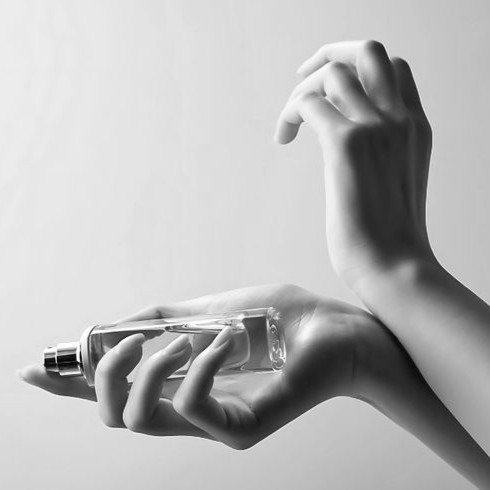
Anti-ageing asked the skin to look younger. Longevity requires the skin to remain healthy for a longer period and also places the same expectation on the person using it. The science, the consumer, and the technology have all converged in the same place at the same time, creating the conditions under which a category stops being a trend and becomes a direction. The companies that take advantage of this opportunity will shape the next decade. It’s precisely these ones we are eagerly waiting to meet.
Byrd, A. L., Belkaid, Y., and Segre, J. A. (2018). The human skin microbiome. Nature Reviews Microbiology, 16(3), 143–155. https://doi.org/10.1038/nrmicro.2017.157
Herz, R. S. (2009). Aromatherapy facts and fictions: a scientific analysis of olfactory effects on mood, physiology and behaviour. International Journal of Neuroscience, 119(2), 263–290.
López-Otín, C., Blasco, M. A., Partridge, L., Serrano, M., and Kroemer, G. (2023). Hallmarks of aging: an expanding universe. Cell, 186(2), 243–278. https://doi.org/10.1016/j.cell.2022.11.001
Sowndhararajan, K., and Kim, S. (2016). Influence of fragrances on human psychophysiological activity: with special reference to human electroencephalographic response. Scientia Pharmaceutica, 84(4), 724–751.